History

Historical Timeline

1815-1840
During this time, water supplied to the Borough of Erie came from shallow wells and natural springs. The Brown’s Hotel located on Sixth and State was famous for its two natural springs.

The Brown Hotel Mansion

1840s

January 24, 1840 the Mansion burned to the ground. This disaster prompted the Borough’s forefathers to create a water system for protection from fire. On June 25, 1841 a committee was appointed by council to award a contract for supplying water for fire protection. A “pump log” water system was installed and supplied water from a large spring on Reed Farm.

1850s
Erie was incorporated on April 14, 1851 and officially became known as the City of Erie.

1860s
By 1865, the City’s rapid growth caused the water works system to be inadequate. An engineering company by the name of H.P.M. Birkinbine Esq. of Philadelphia was obtained to study the City’s need for water and sewerage. The proposal to build the water works on the bay was submitted but was turned down due to high cost. Later that year, the city created a Board of Commissioners to be appointed by the Court of Common Pleas of Erie County. In 1868, the Commissioners began the construction of the Chestnut Pumping Facility. This entailed the construction of the stand pipe, intake pipes and the first pumps. During this time through 1908, water was drawn from Presque Isle Bay without the benefit of any treatment.

1870s
The commissioners purchased seven acres of land from the Cochran Estate.

1890s
The first section of the present day intake pipe was laid in a trench on the floor of Presque Isle Bay.

1900s
The Commissioners created the Chestnut Street Pool. The intake pipe was extended to 3.55 miles, passing under the peninsula to the present day intake crib out in Lake Erie. The section of the Peninsula that came to be known as “Water Works Park” was acquired for the purpose of constructing an intake line and accommodating the settling basin.

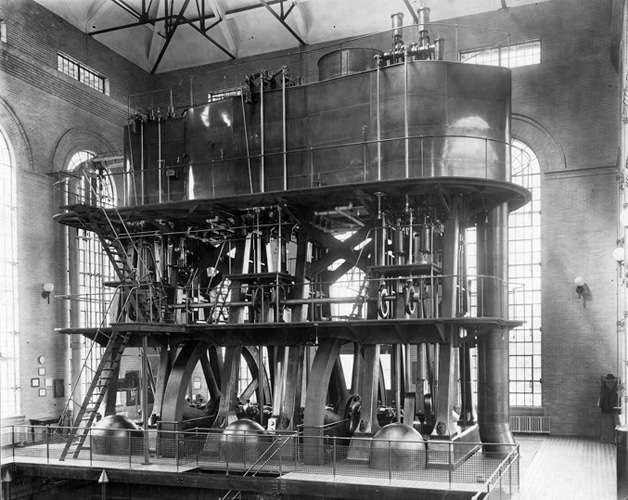
Big Bertha

1910s

The Commissioners erected a repair shop and storage area on the Northeast Corner of 12th and Myrtle Streets. Due to untreated water supply, 1060 cases of Typhoid Fever were reported resulting in 135 deaths. By 1912 the Water Works began treating the water by Hypochlorination. It was decided to construct a treatment plant with a complete chemical and bacteriological laboratory and locate it at the Chestnut Street Facility. “Big Bertha,” a 20 million gallon per day MGD Bethlehem Triple Expansion High Duty Pumping Engine was installed. A second standpipe was also erected near the Sigsbee Reservoir increasing the capacity to 440,000 gallons. From 1916-1918, the Water Works Office Building was also fully constructed.

1920s
The Cherry Street Reservoir, along with a third standpipe, were built to supply water to customers living south of the reservoir at a greater elevation. The Chestnut Street Filtration Building was expanded by adding four new filter beds, bringing the filtering capacity to 32 MGD. In 1927 - the Sigsbee Street Pumping Station, located across from the reservoir, was completed.

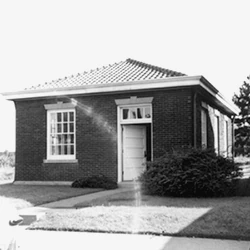
Camphausen Pump Station

1930s

A second pumping and filtration facility was completed on Sommerheim Drive in Millcreek Township. The Camphausen Pump Station was completed and serviced Southeastern Erie and Wesleyville during periods of maximum demand. Cherry Street Reservoir and Pump Station complex was expanded, adding another 5,000,000-gallon section to the existing facility. In 1937, the City of Erie was experiencing acute fiscal problems, and an act of the Legislature of the Commonwealth of Pennsylvania was passed stating that all rights and titles of the Commissioners of the Water Works be transferred to the City of Erie and placed under the direction of City Council.

1940s
System expansion continued with new mains being built all throughout the area. America enters the Second World War. Restrictions by war conditions made it impossible to continue with extensions or engineering improvements. In 1947, Low Duty Chestnut – One 14,000,000 Gallon DeLaval Electric Pump Installed.

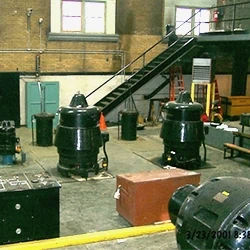
18MGD Low Service Motor Driven Pumps

1950s

In 1950, High Service 26th & Sigsbee was expanded to meet the needs of the High Service District. During the electrification upgrade “Big Bertha” was taken out of service and replaced by three 18MGD Low Service Electric Motor Driven Pumps, one 26MGD and two 18MGD Low Duty Electric Motor Driven Pumps. In 1951, the Chestnut Street Boiler Room was converted to a storage warehouse due to the addition of electricity at the Pump Station. Six additional filter units were also installed at the West Filtration Plant during this time. From 1951-1955, East Tank construction began on the 800,000 Gallon Standpipe. In 1956, West Tank construction completed the 800,000 Gallon West Standpipe. In 1956, the 175 acres of the Water Works Reservation located on Presque Isle was turned over to the Commonwealth of Pennsylvania. Today this area is known as Water Works Park at Presque Isle State Park.

1960s
The John D. Johnson 10 million gallon Low Service Reservoir is constructed. The City of Erie changed from a Commission form of Government to the Mayor – Council form. The Bureau of Water was placed under the jurisdiction of the Department of Public Works. This decade also began an era of water service expansion into Wesleyville, Lawrence Park and parts of Harborcreek and Millcreek that would continue until 1986.

1980s
In 1989, the new Authority was formed and immediately began discussions to take over the operations of the Bureau of Water.

1992-1993
Major water mains were cleaned and relined and the interior of both intake lines were cleaned. Construction of the East Lake Road Pump Station was completed. The Erie City Water Authority took control of the water system on January 1, 1992.

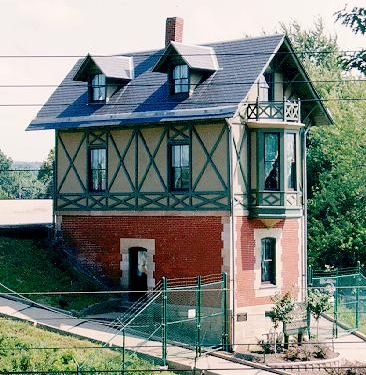
The Sigsbee Care Takers House

1994-1996

Construction of the South Booster Station on the Cherry Street Reservoir Complex was completed. Sigsbee Care Takers House was restored and the cover and liner of the reservoir were replaced. Filtration rehabilitation was completed at Sommerheim and Chestnut Street Filtration Plants. Water Works developed a Master Plan for the future of the Authority. The Cherry Street Pump Station was rehabilitated and the Administration Building was remodeled. Throughout the facility, the grounds were beautified and the public access walkway at the Chestnut Street Facility was installed. Also, the Cherry Street and Johnson Reservoirs were cleaned and repaired, along with the completion of the Depot Road Pump Station.

1997-1999
Renovation of the Chestnut Street Filtration Plant was finished and an improved security system was installed. The corrosion control system was put in place and the Camphausen Pump Station was rehabilitated. Renovation of the 12th and Myrtle Meter Distribution Building took place over the course of the year. The Kuhl Road Hydro-pillar was installed. The Erie Water Works also completed the construction of the Station Road Pump Station and installed new grates on the intake cribs.

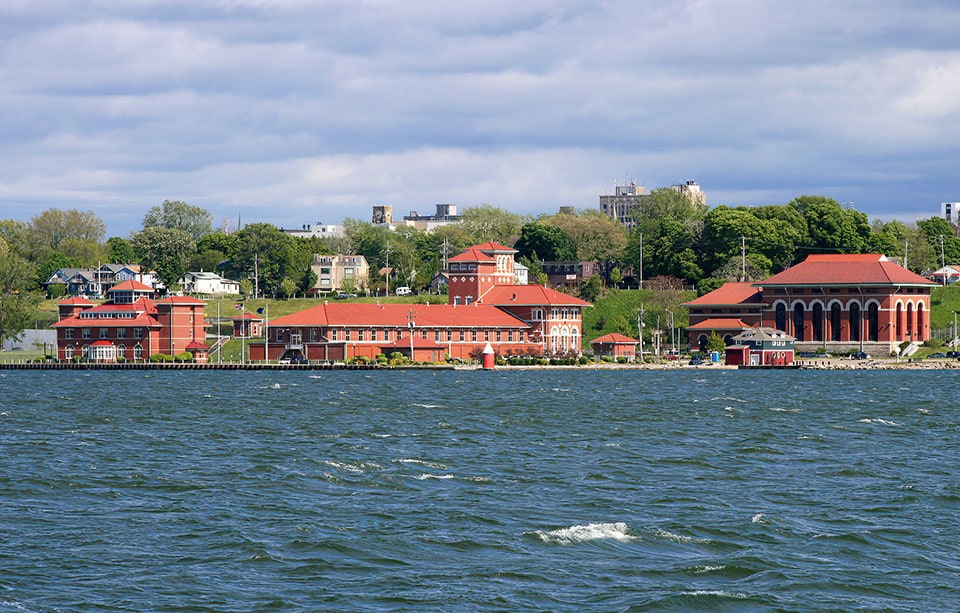
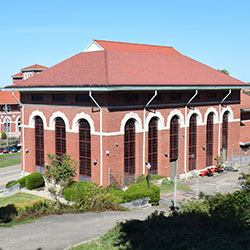
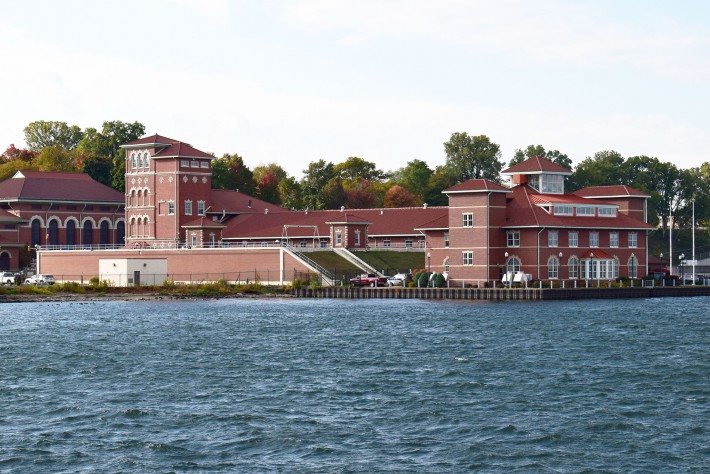
Chestnut Street Pumping Station

2000-2002

Erie Water Works completed the installation of the Supervisory Control And Data Acquisition (SCADA) System and the disinfection improvements at Chestnut Street and Sommerheim Treatment Facilities. The City Wide Metering Project was finished and the Chestnut Street Pumping Station was renovated.

2003
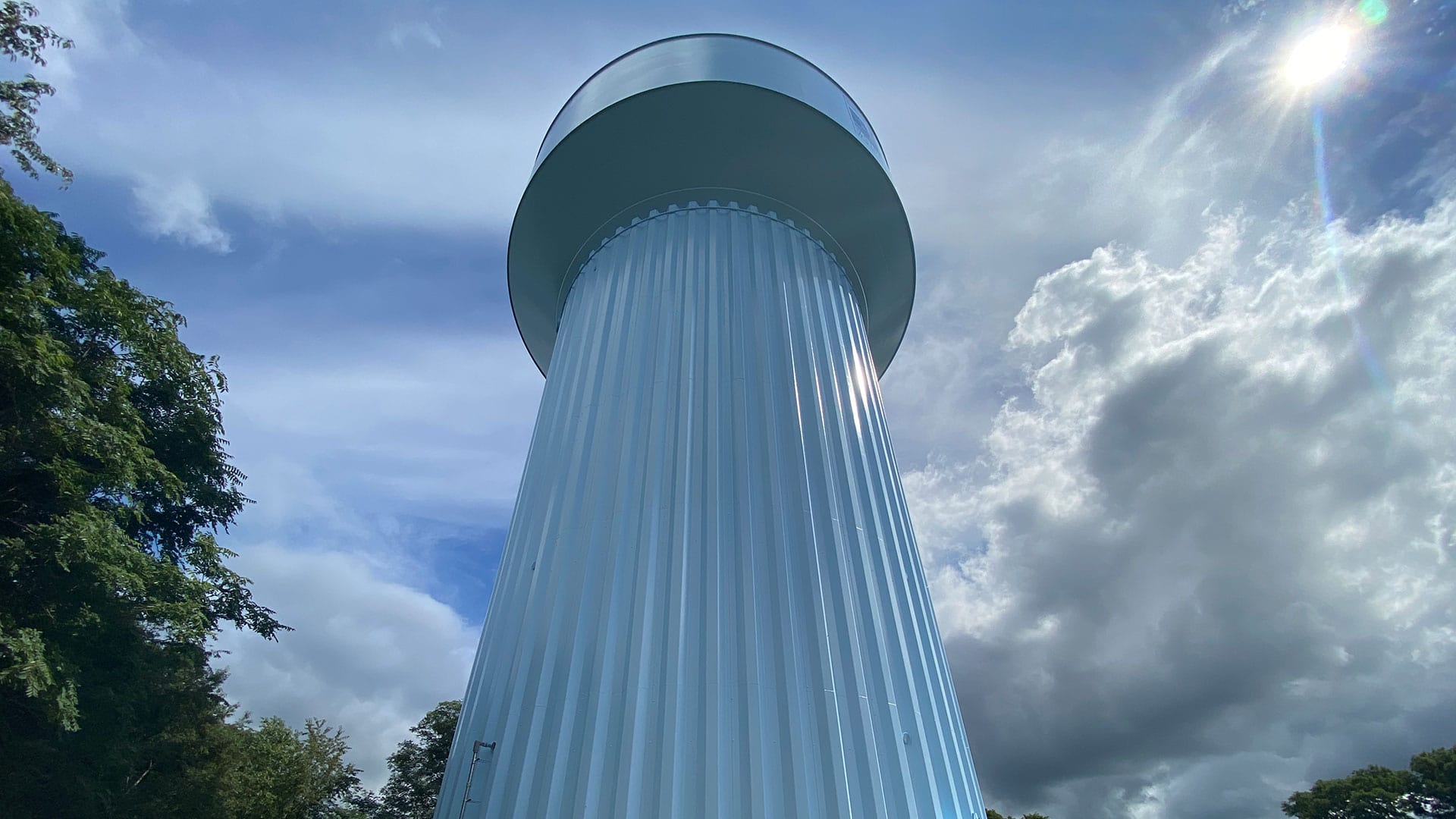
The Chestnut and Sommerheim Fluoridation Facilities were completed. Recoated and Painted the East Tank and West Storage Tank. Erie Water Works began the construction of the East Lake Road and South Booster Storage Hydro-pillars. Continuation of several Capital Improvement Projects in the Water Treatment, Distribution, Water Main Replacements, Meter Change-outs and Pumping.

2004
The East Lake and South Booster Hydro-pillars were completed and Erie Water Works began to extend water service to the Erie Golf Course. Construction was completed at the Distribution Storage Facility. Work continued on many Water Main, Valve and Hydrant replacement projects and on Water Treatment and Sludge Handling upgrades. Improvements were made to the East Lake Road Pump Station.

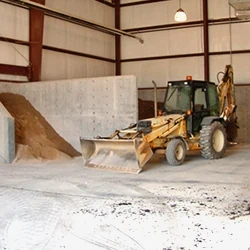
Distribution Storage Facility

2005

Work continued on the Sommerheim Standby Power Project. The Geographic Information System (GIS) Project began with the land base conversion process. Construction of the 12th and Myrtle Distribution Storage Facility was completed. A new high-speed communication network was installed linking the three main facilities and expanding out to the satellite stations. The Radio Read Program began with meter change-outs for several commercial and industrial customers.

2006-2007 Water Treatment Projects
Erie Water Works finished the replacement of Sommerheim Low Duty windows and water filtration media replacement. Inspection and maintenance to the Chestnut Intake Cribs. Rechlorination at Camphausen Pump Station, and engineering and design for additional work at the Sommerheim Pump Station.

2006-2007 Pumping Projects
Improvements were made at the East Lake Road, Sigsbee and Cherry Street Pump Stations as well as the Chestnut Street Pipe Gallery. The Sommerheim Standby Generator Project was completed.

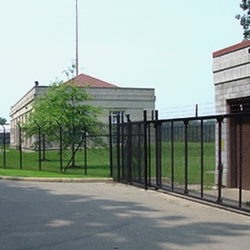
Security Fencing around Sommerhiem Low Duty

2006-2007 Transmission & Distribution

Several Water Main Replacement and/or Extension projects were completed including Zuck Rd., Glenwood/Glen, Burton Ave., Chelsea St., Cameron St., Andrews Park Blvd., East 5th St., and Downing Ave. Other large Main Replacements and Extension projects included State Street - Bayfront Parkway to West 2nd Street and Erie Golf Course/Zimmerly Rd. Additional Capital Projects included the Radio Read and Meter Install Programs, and the Sigsbee and Johnson Street Reservoirs’ Control Valve Projects. The Station Rd. Pressure Reducing and Rechlorination, along with the Valve Replacement, Hydrant, and Service Replacement Programs were completed. Also, 2007 marked the Commencement of the Phase I Design of the McKean Extension Project.

2008 & Beyond
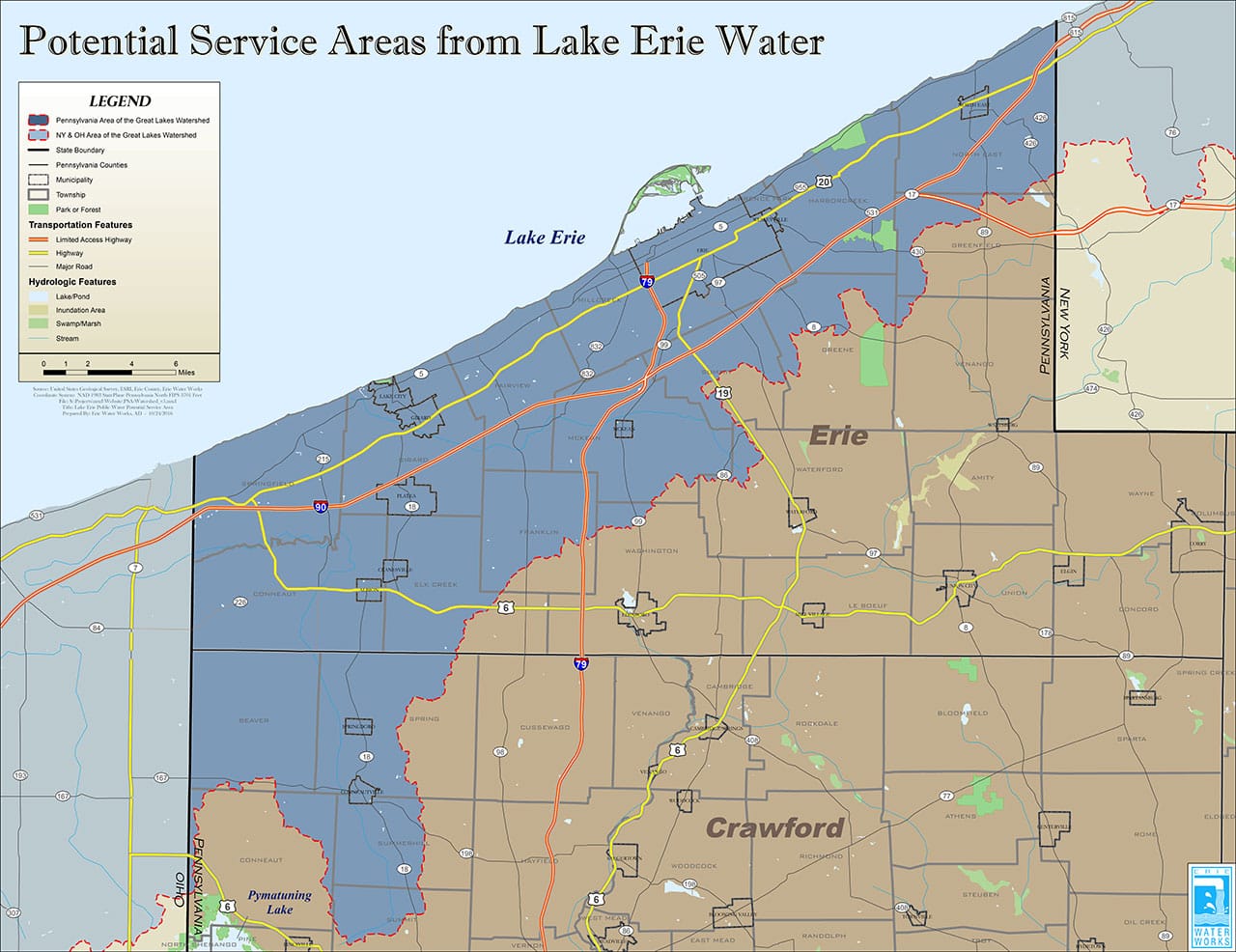
One of our largest projects underway is the service expansion into McKean Borough and Township. Major renovations are in full swing at the Sommerheim treatment and pumping facility. These major capital improvement projects along with the numerous ongoing projects and programs will help Erie Water Works meet the needs of an ever-growing community in 2008 and beyond.